Buyer Guides For
Archiects & Engineers
Be sure to take your time as you evaluate different solutions. Your firm and culture are unique in many ways. There is no one size fits all.
How to Choose the Right Software for Your A/E Firm
Choosing software for an architecture or engineering firm shouldn’t feel like a gamble—but for most firms, it does.
There are too many tools. Too many generic reviews. Too many “top 10” lists are written by people who have never billed a project, managed scope, or dealt with a not-to-exceed contract.
That’s why we built these Buyer Guides.
Each guide is written specifically for a type of A/E firm or discipline, breaking down:
- What makes your work different
- Where most firms lose money (and don’t realize it)
- What features actually matter (and which ones don’t)
- How different software approaches handle billing, scope, and profitability
A true buyer’s guide should help you define your needs, compare options, and make a confident decision—not just throw a list of tools at you.
That's the standard here.
Explore Buyer Guides by Discipline
Find the guide that matches how your firm actually operates—not just what you call yourself.
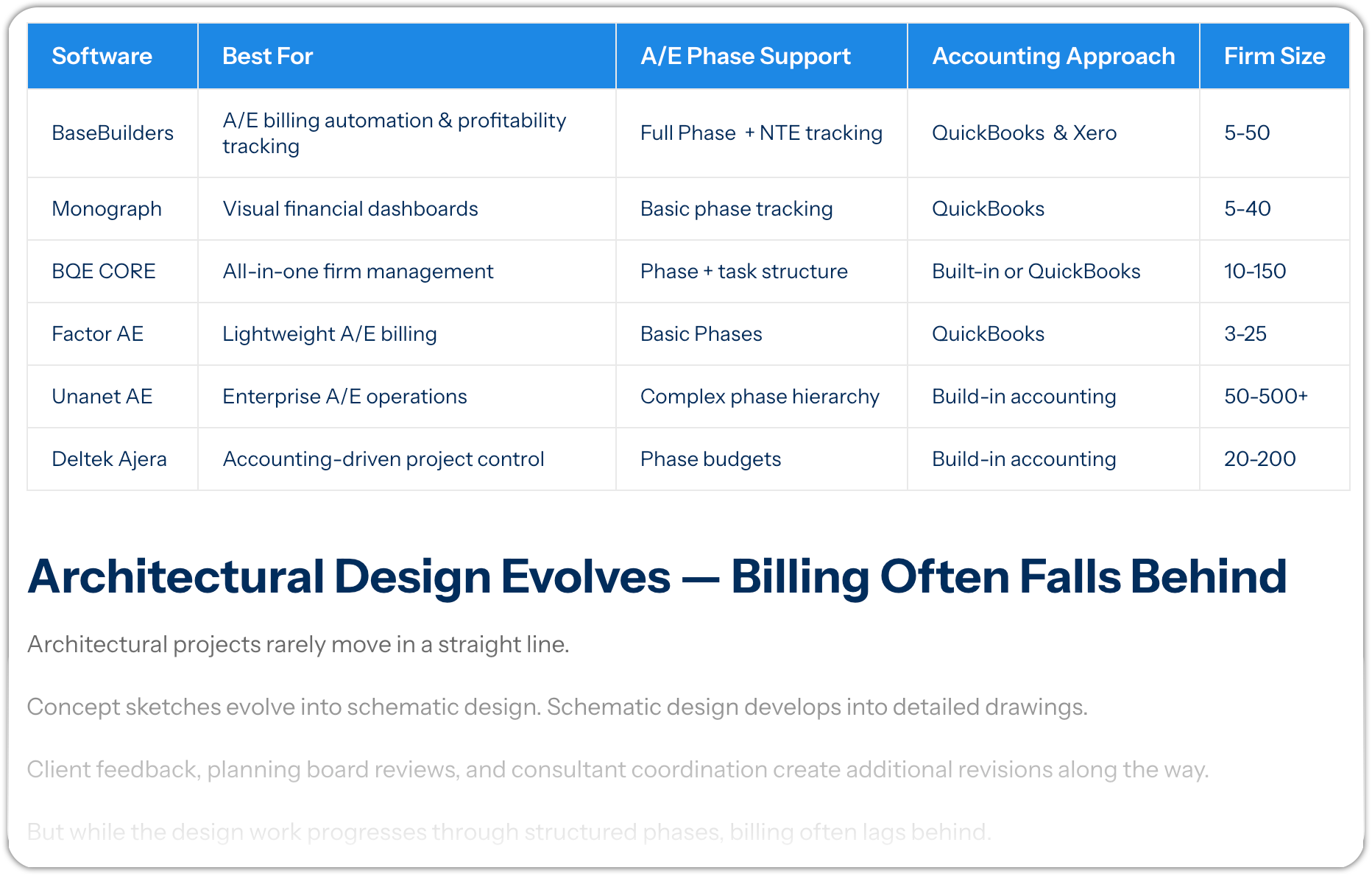
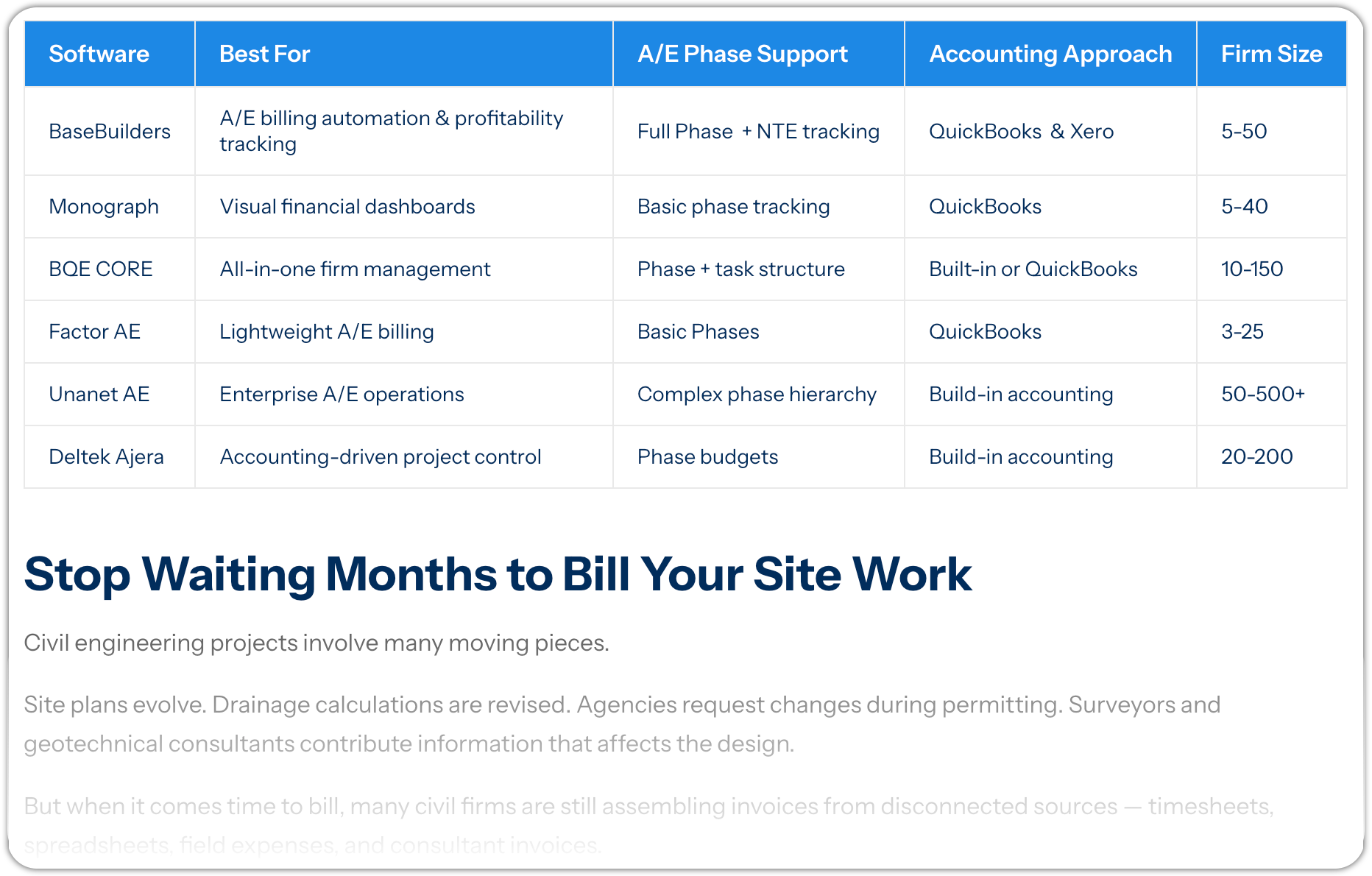
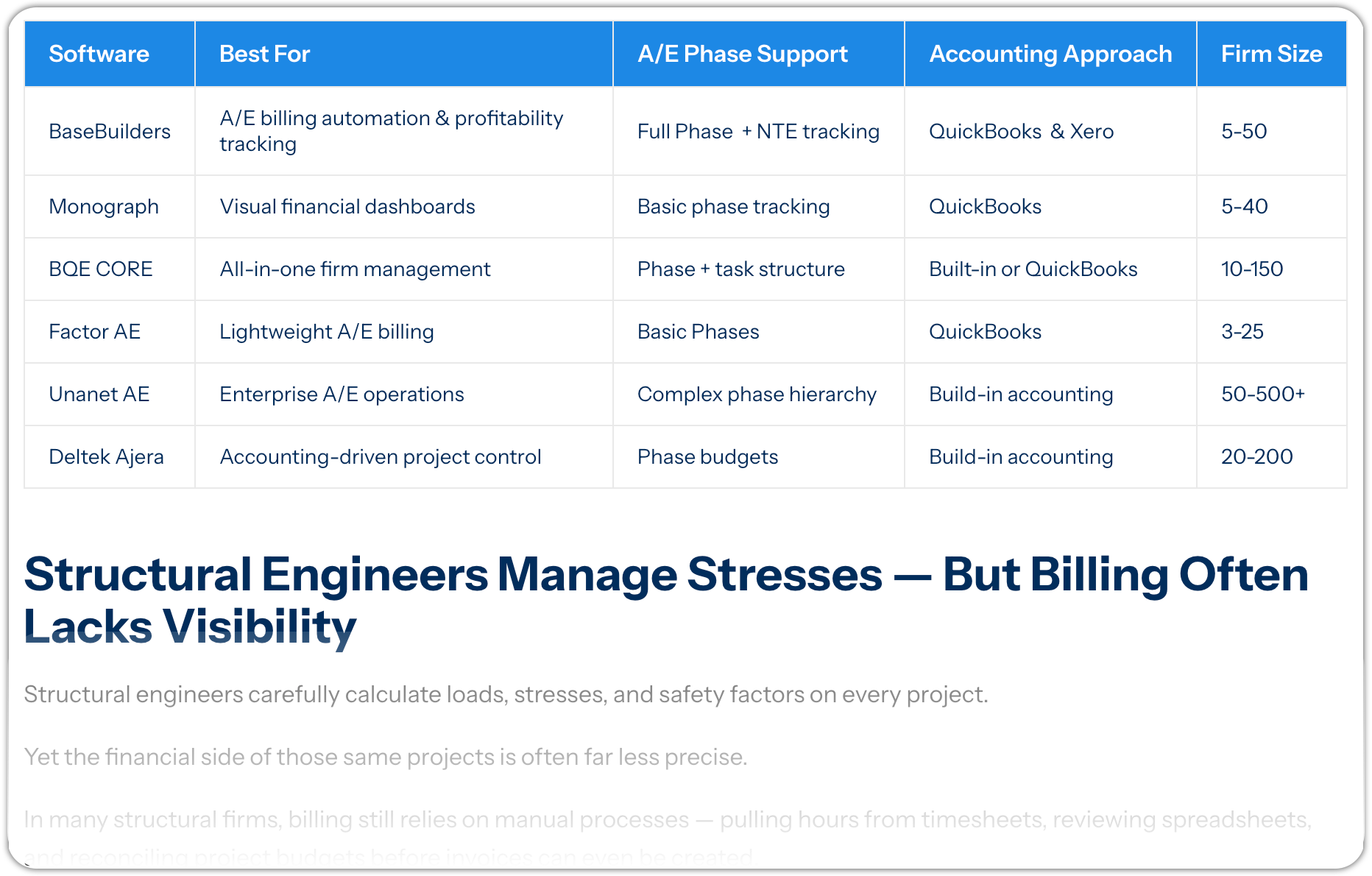
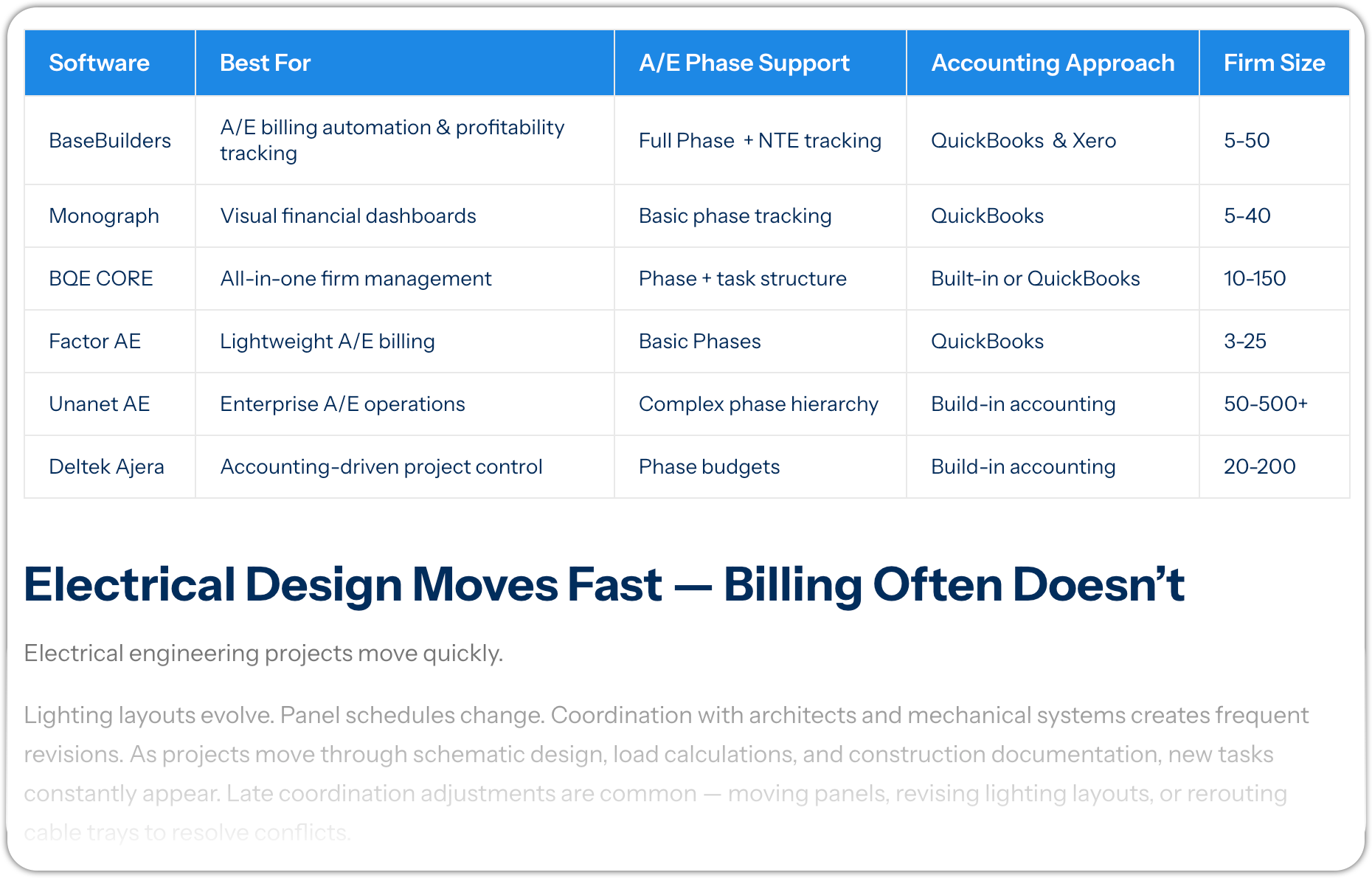
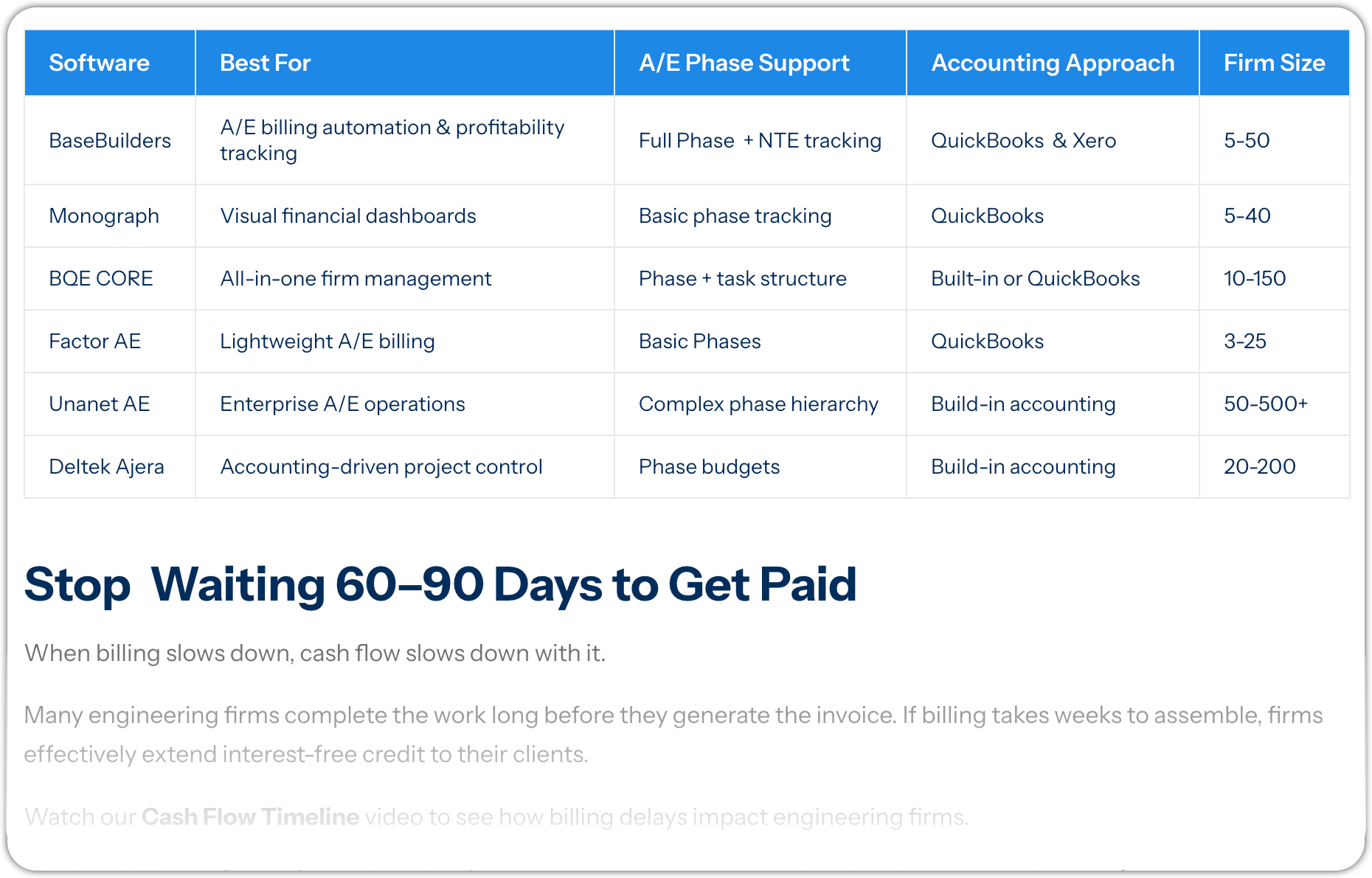
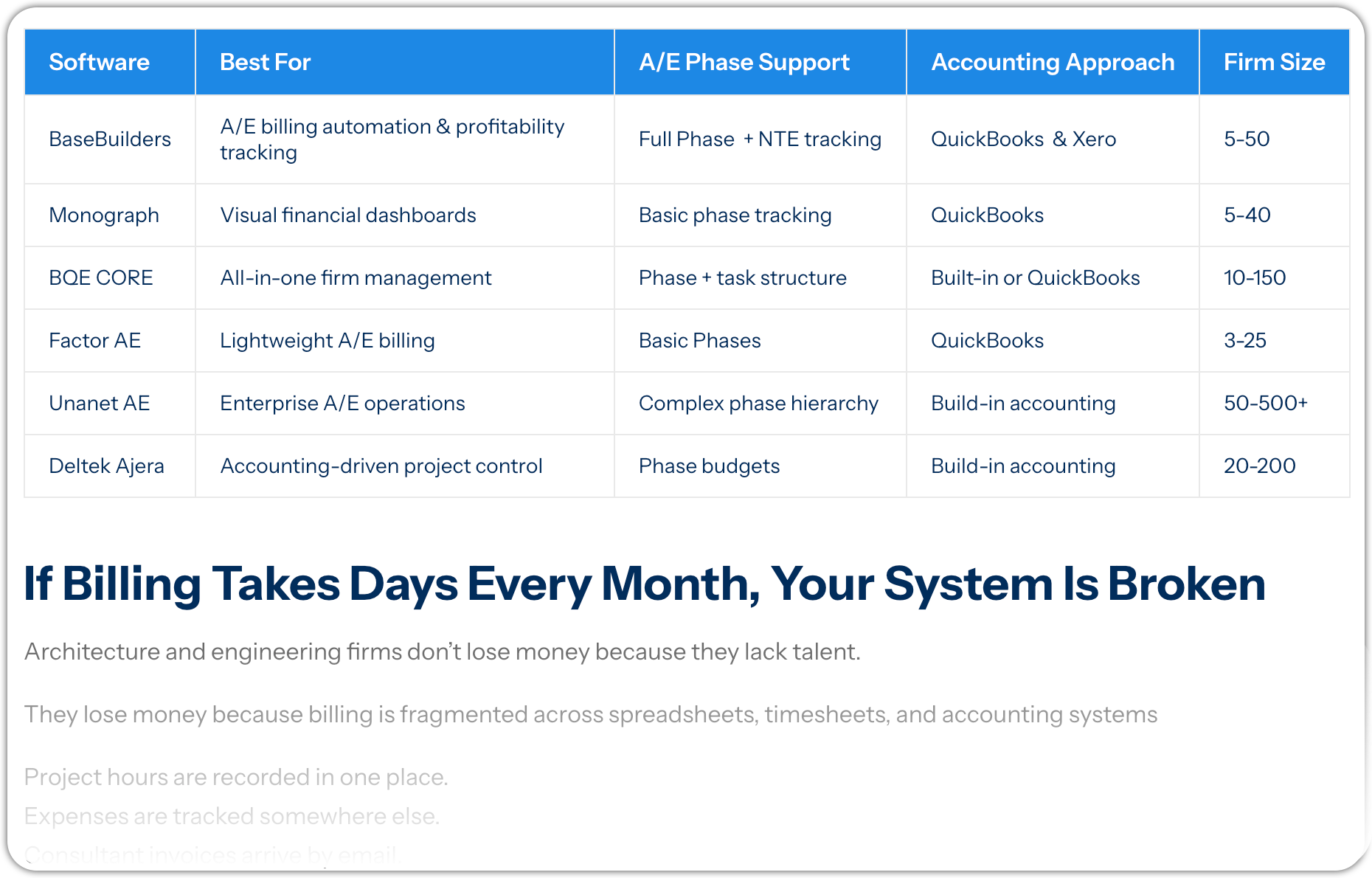
Why These Buyer Guides Are Different
Most software content treats architecture and engineering firms like any other business.
That’s the first mistake.
A/E firms don’t fail because they picked the wrong “project management tool.”
They struggle because:
- Billing doesn’t match how contracts are structured
- Scope creep isn’t tracked or recovered
- Time, expenses, and consultants live in disconnected systems
- Profitability is only visible after it’s too late
Generic software hides these problems.
The right system exposes—and fixes—them.
These guides are built around one core idea:
The real decision is not “which software is best?”
It’s “which system actually fits how A/E firms make money?”
How to Use These Buyer Guides
Don’t read these like blog posts. Use them like a decision tool.
Each guide will help you:
- Identify your firm’s pressure points
- (billing delays, scope creep, staffing gaps, cash flow issues)
- Understand what capabilities actually matter
- (not generic features—real A/E-specific workflows)
- Compare categories of software approaches
- (spreadsheets, generic PM tools, accounting-first systems, A/E-specific platforms)
- Make a short list of tools worth evaluating
If you do it right, you should walk away with clarity—not more options.
Still Early in Your Search?
If you’re comparing specific tools, head over to our Compare Software section, where we break down platforms side-by-side.
If you want to understand how high-performing firms actually operate, check out our Best Practices guides.
One Last Thing
Most firms don’t switch software because they found something better.
They switch because what they’re using is quietly costing them money:
- Invoices going out late
- Scope slipping through the cracks
- Teams working without visibility
- Profit showing up as a surprise (or not at all)
The right system doesn’t just organize your work.
It changes how your firm performs.
These guides will help you figure out what that system should look like.

BaseBuilders’ easy-to-use software is specifically designed to help small to mid-sized firms track time, manage projects, stay on top of expenses, and more. We’ll handle the invoicing for you so you can focus on growing your firm and designing wonderful spaces.