Stop losing profit to messy time, reimbursables, and scope creep.
Base Builders helps MEP firms invoice faster and more accurately—by pulling time, expenses, and additional services into clean, client-ready invoices (without spreadsheet gymnastics).

MEP billing gets complicated fast.
Multiple disciplines (mechanical, electrical, plumbing, fire protection) under one roof
Different billing rules per contract (fixed fee + T&M add-ons + reimbursables)
Field visits, mileage, permits, prints, equipment rentals
Subconsultants and pass-through costs
Scope creep that starts as “quick help” and ends up as unpaid labor
Everything billable lands on the invoice—automatically.
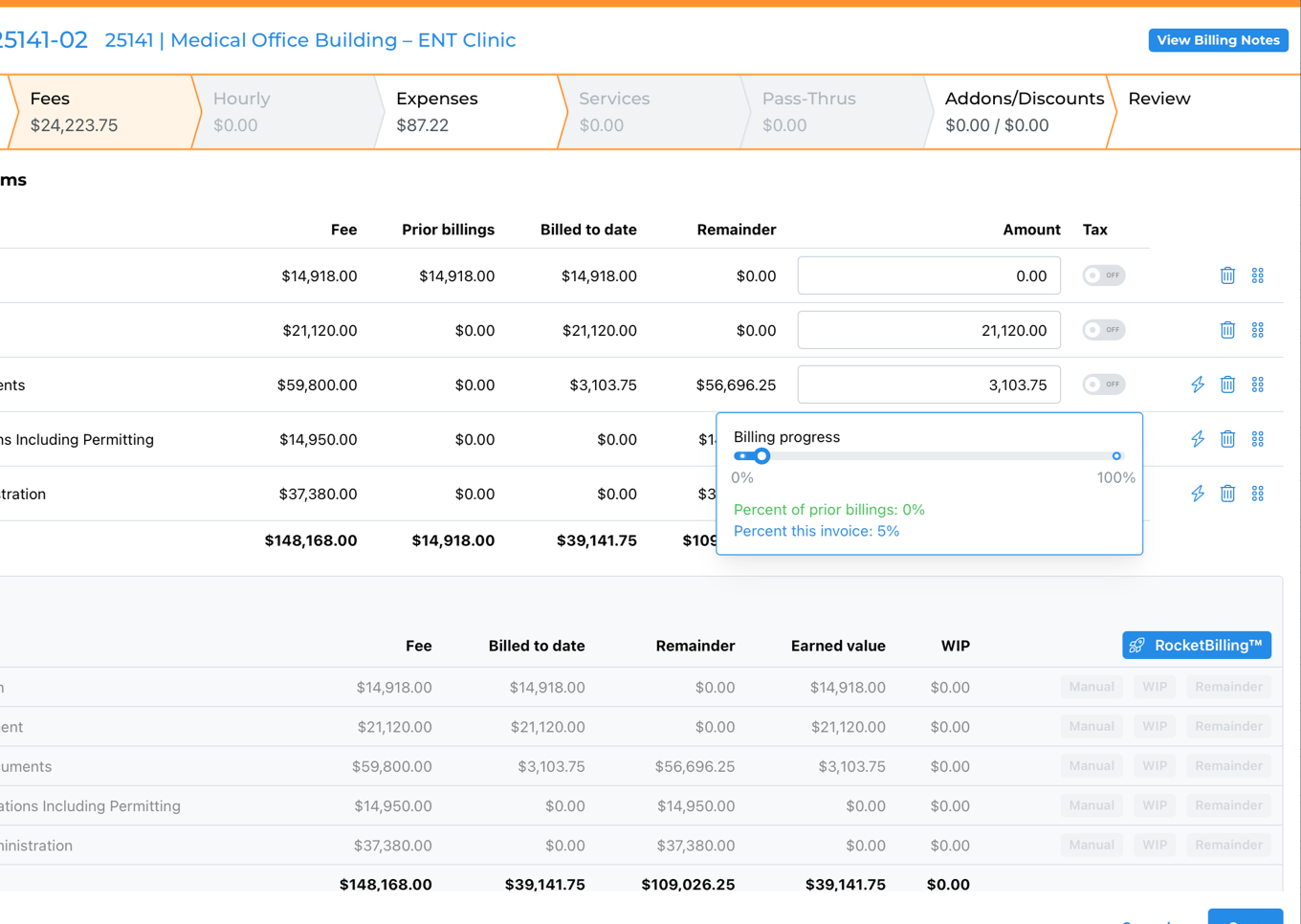
Rocket Billing™
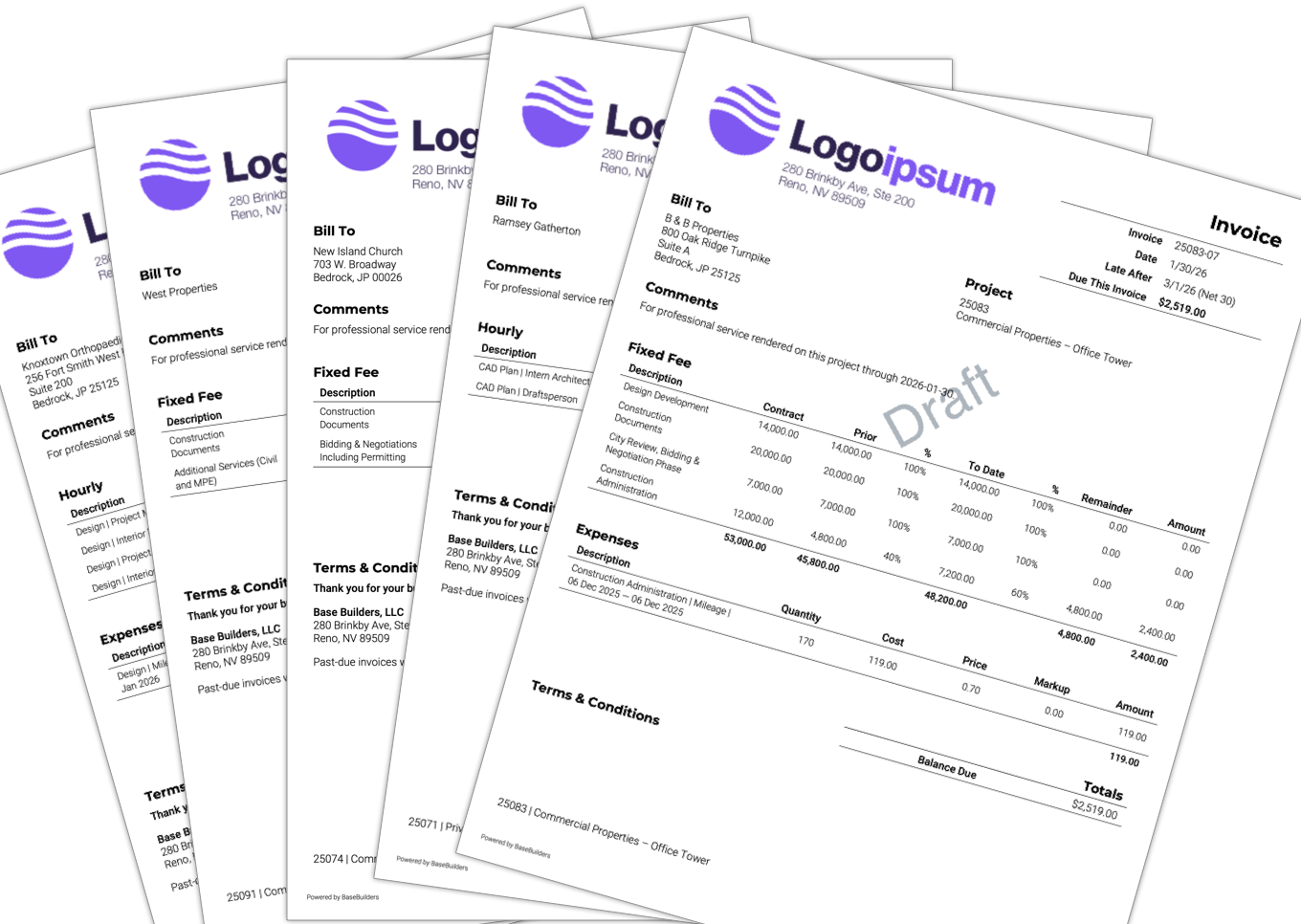
Generate a stack of invoices in minutes—not days. Pull approved time, reimbursables, and additional services into consistent invoice formats.
Track scope creep as “Additional Services”
Separate base contract vs. extra work so you can show the story clearly (and protect your margin).
Job costing in real time
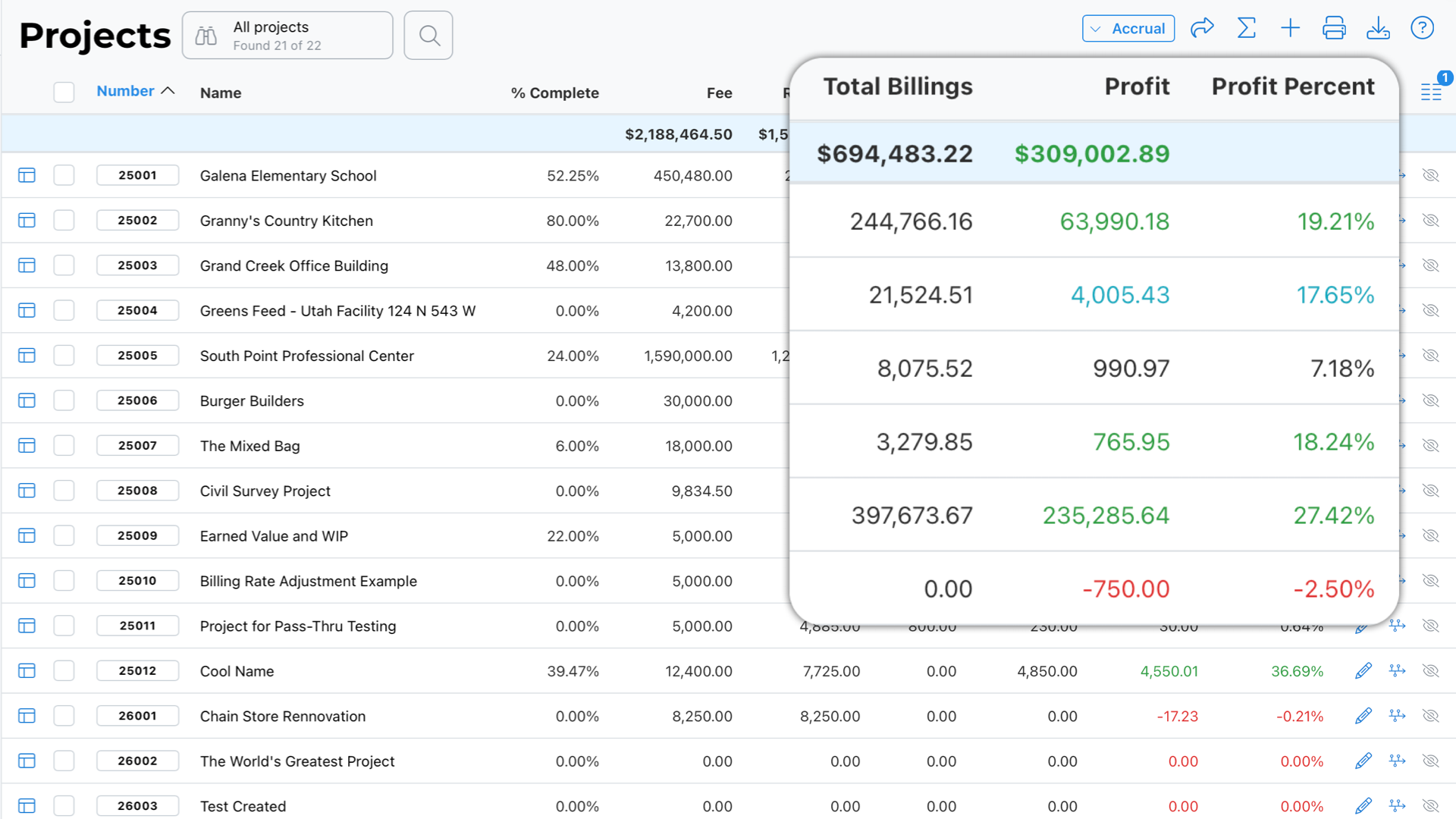
See project financials as work happens—hours, cost, WIP, earned vs. burned—so PMs don’t get surprised at month-end.
Reimbursables done right
Mileage, permits, tolls, prints, equipment rentals—capture it once, bill it cleanly.
Cost-Plus ready
When agencies require cost-plus or auditable support, keep your billing organized and defensible.
Integrates with your accounting
Keep your financial system as the source of truth while Base Builders runs your project + billing workflow.
How MEP firms use Base Builders
Step 1 Capture
Staff enter time and expenses against the right project and phase.
Step 2 Review
PMs/administrators review for accuracy and scope creep (base vs. additional).
Step 3 Invoice fast
Rocket Billing™ generates invoices across projects in a few clicks—consistent formatting, fewer mistakes.
Step 4 Get paid sooner
Cleaner invoices, fewer back-and-forth questions, faster approvals.
Built for the way MEP work actually happens.
A billing system that doesn’t depend on heroics.
Most MEP firms aren’t short on work—they’re short on time to turn work into invoices. Base Builders reduces the monthly billing scramble by standardizing your workflow and making billable activity easy to capture and easy to invoice.
Reduce billing time with Rocket Billing™
Fewer missed expenses and “oops” write-offs
Better project visibility for principals and PMs
Common MEP billing workflows we support
Fixed fee with additional services tracking
T&M with not-to-exceed (NTE) guardrails
Retainers and drawdowns
Reimbursable-heavy jobs (field visits + printing + permits)
Cost-plus / agency requirements
“We used to lose days chasing time and reimbursables. Now billing is a repeatable process.”
“Our invoices are cleaner, and clients question them less. Cash flow improved immediately.”
Get Fully Onboarded in 7 Business Days
Our team is ready to guide you from where you are to where you want to be. Give up managerial minutia for the freedom to focus on the work you do best.

Frequently Asked Questions
BaseBuilders is specifically built for architecture and engineering firms, helping reduce administrative burden and save time so teams can focus more on work and profitability.
What is the best billing software for architecture firms?
The best billing software for architecture firms is one built specifically for A/E workflows — including phase-based billing, percent complete invoicing, time and expense tracking, consultant markups, and integration with accounting systems like QuickBooks or Xero. Generic invoicing tools often miss critical architecture-specific billing needs.
Should architects use accounting software for invoicing?
Accounting software alone is not enough. While tools like QuickBooks or Xero handle financial reporting, they are not designed to manage project phases, WIP, percent complete billing, or detailed time tracking. Most architecture firms benefit from project-based billing software that integrates with accounting platforms.
How can billing software improve cash flow for architecture firms?
The right system shortens billing cycles, reduces errors, and ensures every billable hour and reimbursable expense is captured. Faster invoice generation and clearer documentation lead to fewer disputes and quicker payment.
What features should architecture firms look for in billing software?
Key features include phase-based billing, percent complete tracking, WIP reporting, consultant expense handling, customizable invoice templates, retainers, time and expense tracking, and accounting integration.


What is the best billing software for architecture firms?
The best billing software for architecture firms is one designed specifically for project-based A/E workflows. Architects rarely bill using simple flat invoices. Instead, they manage phase-based billing, percent complete billing, time and materials contracts, reimbursable expenses, consultant markups, and retainers. Generic invoicing software cannot properly track these variables.
Architecture firms should look for billing software that connects time tracking, expense management, and project budgets directly to invoicing. That ensures every billable hour and reimbursable cost flows automatically into draft invoices. Integration with accounting platforms like QuickBooks or Xero is also essential to eliminate double entry and maintain accurate financial reporting.
Without architecture-specific billing tools, firms often rely on spreadsheets and manual calculations. That leads to missed revenue, billing delays, and inconsistent cash flow. A purpose-built architecture billing platform reduces administrative time, improves invoice accuracy, and helps principals maintain visibility into project profitability.
How do architecture firms typically bill clients?
Architecture firms commonly bill using fixed fees, percent complete billing by phase, milestone billing, or time and materials contracts. Many projects include a mix of these methods, especially when change orders or additional services are introduced.
Percent complete billing is particularly common in architecture. Firms track progress within defined project phases—such as schematic design, design development, and construction documents—and invoice based on the percentage completed. This requires accurate tracking of budgets, hours, and phase allocations.
In addition, architects frequently bill reimbursable expenses such as printing, site visits, travel, and consultant costs. Without integrated expense tracking tied directly to the project, these costs are easily forgotten.
The most efficient architecture billing systems combine project management, time tracking, expense capture, and invoicing into one platform. This eliminates manual calculations and ensures invoices reflect actual project performance.
Why do architects struggle with invoicing and cash flow?
Many architecture firms struggle with invoicing because their billing process is fragmented. Time sheets may live in one system, expenses in another, and invoices in a spreadsheet or accounting platform. This disconnect causes delays while staff track down missing information before billing can begin.
When invoices are delayed—even by a few weeks—cash flow suffers. Architecture firms still need to cover payroll, consultant payments, rent, and overhead while waiting for client payments. Over time, slow billing cycles create unnecessary financial pressure.
Another common issue is unbilled work. If time entries or reimbursable expenses are not recorded consistently, revenue simply disappears. Studies across professional services industries consistently show that revenue leakage can significantly reduce profitability.
Modern architecture billing software shortens billing cycles, improves accuracy, and provides clear work-in-progress reporting. When firms know exactly what is billable and can generate invoices quickly, cash flow becomes far more predictable.
How can architecture firms track additional services separately from the base contract?
Architecture firms frequently struggle to separate their original contracted scope from additional services requested during the project. Design revisions, expanded deliverables, extra site visits, and coordination meetings often fall outside the base agreement but get absorbed into regular project time if not tracked properly.
Modern architecture billing software should allow firms to create separate billing buckets or phases for additional services. This allows every hour and expense tied to expanded scope to be tracked independently from the original contract amount.
When additional services are clearly separated, principals can compare the base contract value against the accumulated cost of scope creep. This not only improves profitability analysis but strengthens change order discussions with clients.
Without this separation, additional services become invisible. Over time, this erodes margins and trains clients to expect unpaid work. A billing system that clearly distinguishes original scope from added services protects revenue and improves project transparency.
What is the best way to measure scope creep in architecture projects?
Scope creep in architecture often appears gradually. A few extra revisions. Additional renderings. More coordination calls. Individually, they may seem minor—but collectively they can significantly exceed the contracted budget.
The most effective way to measure scope creep is to track actual time and expenses against the original contracted phase budgets. Advanced architecture billing software allows firms to compare the base contract amount to real-time labor costs and billed revenue.
When additional services are tracked separately, leadership can see exactly how much work exceeds the original scope. This makes it easier to issue change orders or renegotiate fees before profitability suffers.
Without structured tracking, firms rely on gut instinct rather than data. Data-driven billing systems give architecture firms the clarity they need to protect margins.
Can architecture billing software handle cost-plus contracts for government projects?
Yes — but not all billing systems are built to handle cost-plus contracts effectively.
Cost-plus billing, often required by government agencies, reimburses firms for allowable direct costs plus an agreed markup or fee. This requires precise tracking of labor costs, reimbursable expenses, and overhead allocations.
Architecture firms working with municipalities, school districts, or federal agencies must be able to track actual labor cost (not just billing rate), calculate markups, and generate detailed audit-ready invoices.
Billing software designed for A/E firms should allow firms to define cost rates separately from billing rates, apply negotiated markups, and generate documentation that meets government reporting standards.
Without structured cost tracking, cost-plus billing becomes manual and error-prone. The right software automates calculations and reduces compliance risk.